
Scheduling & Site Safety: How a Well-Run Alberta Job Site Actually Operates
By Afroz Shaik, Founder, AM Builders | October 12, 2026 | 7 min read
Quick Answer
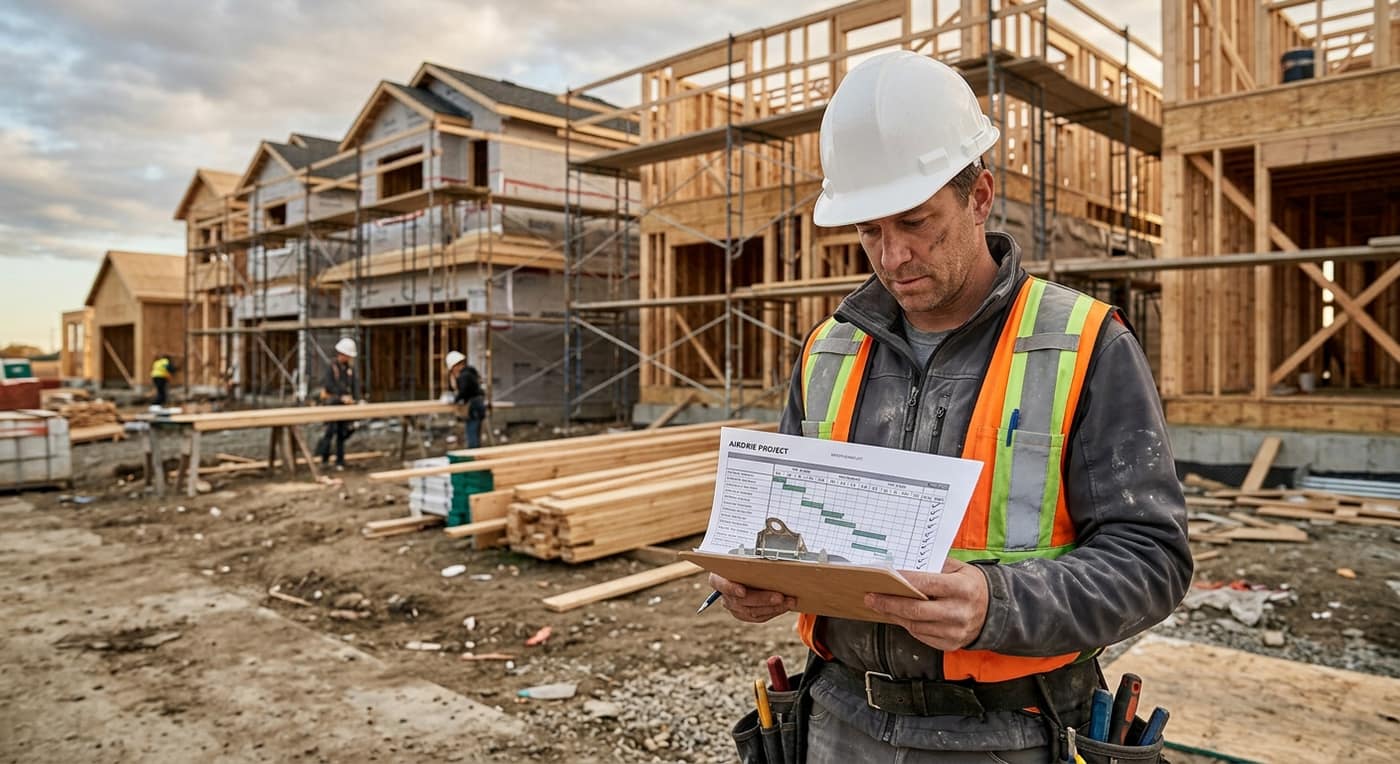
Before work starts on any Alberta project, confirm: (1) how weather-sensitive work like concrete pours is scheduled and protected, (2) a written site safety plan with a named supervisor, (3) a realistic project timeline sequenced around inspections and trades, (4) how the site and your property are protected during work, (5) how inspection milestones are coordinated into the schedule, and (6) what final handover and cleanup actually looks like.
- A schedule that ignores Alberta's weather isn't a schedule — it's a guess with a calendar attached.
- The best-run sites are boring to watch, precisely because nothing is left to chance.
1. Seasonal & Weather Scheduling
Alberta's freeze-thaw cycles aren't a minor scheduling inconvenience — they directly affect whether concrete cures properly, whether excavation is even possible, and whether exterior work can proceed safely. A schedule that ignores the calendar is a schedule that's already behind before it starts.
Tip
Concrete doesn't care about your move-in date — it cares about temperature.
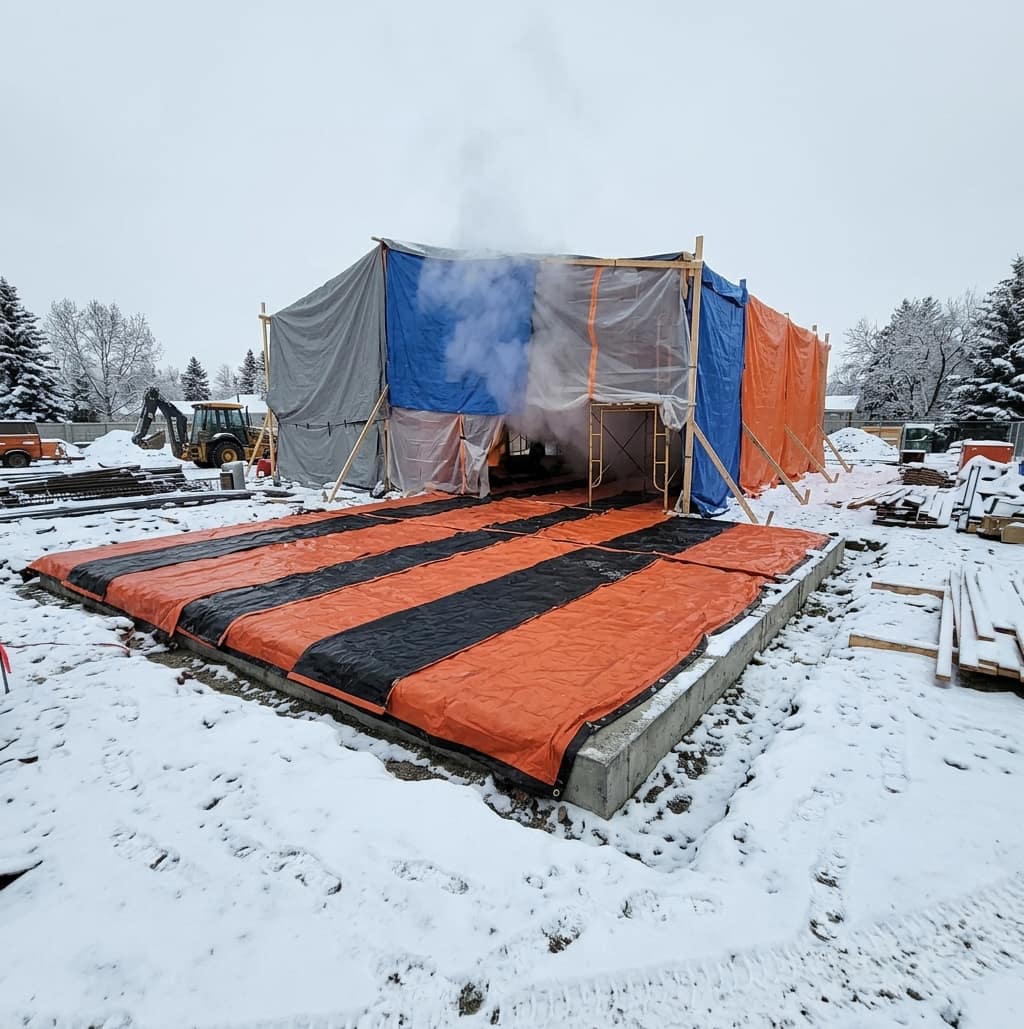
Ask how concrete pours, excavation, or exterior work scheduled through shoulder season or winter will be protected — heated enclosures, insulated blankets, and admixtures are standard answers from a contractor who's planned for this before. This is directly tied to frost depth and foundation design, since a footing poured without cold-weather protection can be compromised before it ever has the chance to heave.
Tip
"We'll pour it anyway and see how it goes" is not a cold-weather plan — it's a bet against physics.
2. Site Safety Plan & OH&S Compliance
Falls, unsecured excavation, and equipment incidents are among the leading causes of injury on residential construction sites, and Alberta OH&S requires a site-specific safety plan for good reason — because "we've never had a problem" is not a safety strategy, it's luck that hasn't run out yet.
Tip
A safety record with no incidents yet isn't the same as a site that's actually safe.
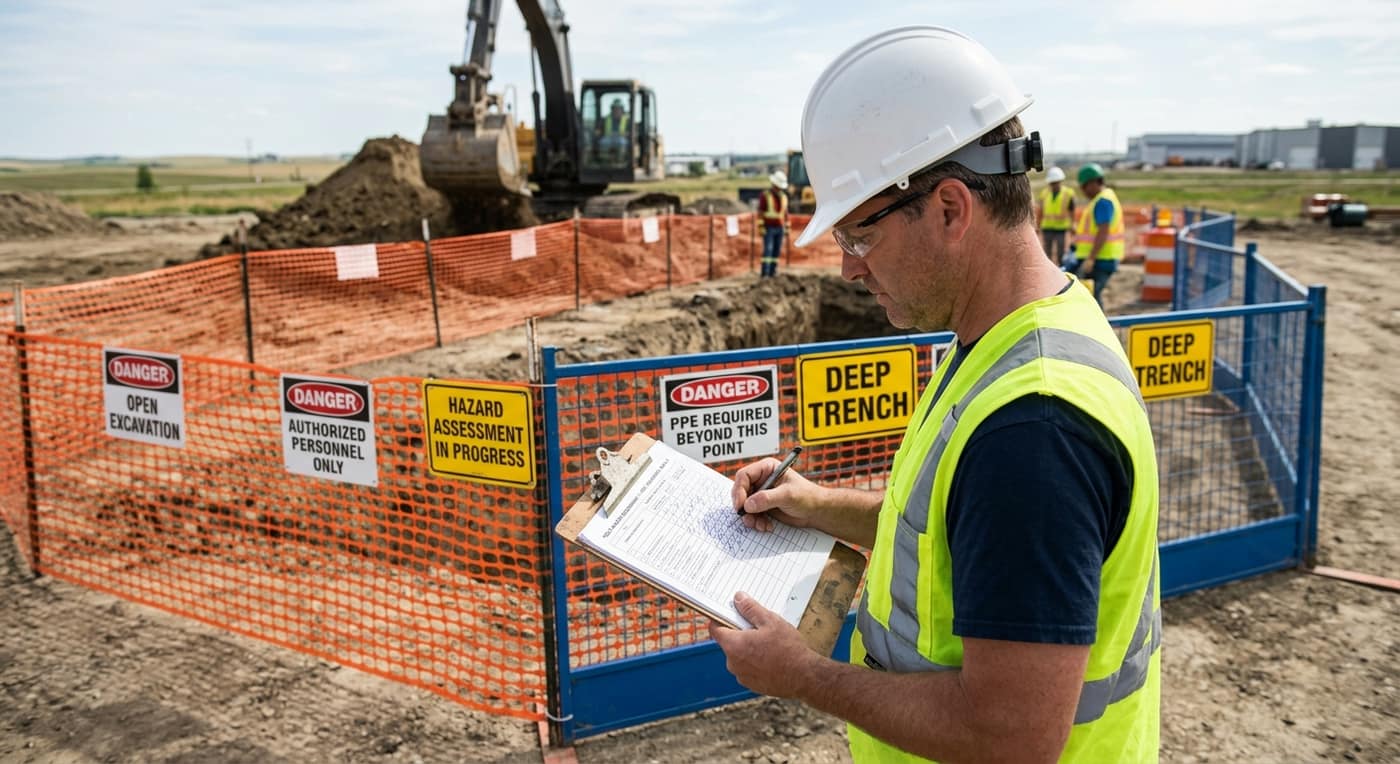
Ask for a written, site-specific safety plan and the name of the competent supervisor responsible for it — not just a generic company policy binder. This connects directly back to WCB coverage, since a real safety plan and current WCB clearance are two halves of the same protection for everyone on site, including you.
Tip
If nobody can name the site supervisor, nobody's actually responsible for site safety.
3. Realistic Timelines & Sequencing
An honest timeline accounts for permit approval waits, inspection scheduling, trade availability, and weather — not just the number of workdays the physical labour would take in ideal conditions. Optimistic timelines are how projects quietly slip by weeks without anyone officially admitting it.
Tip
A timeline that only accounts for good days isn't a timeline — it's a wish.
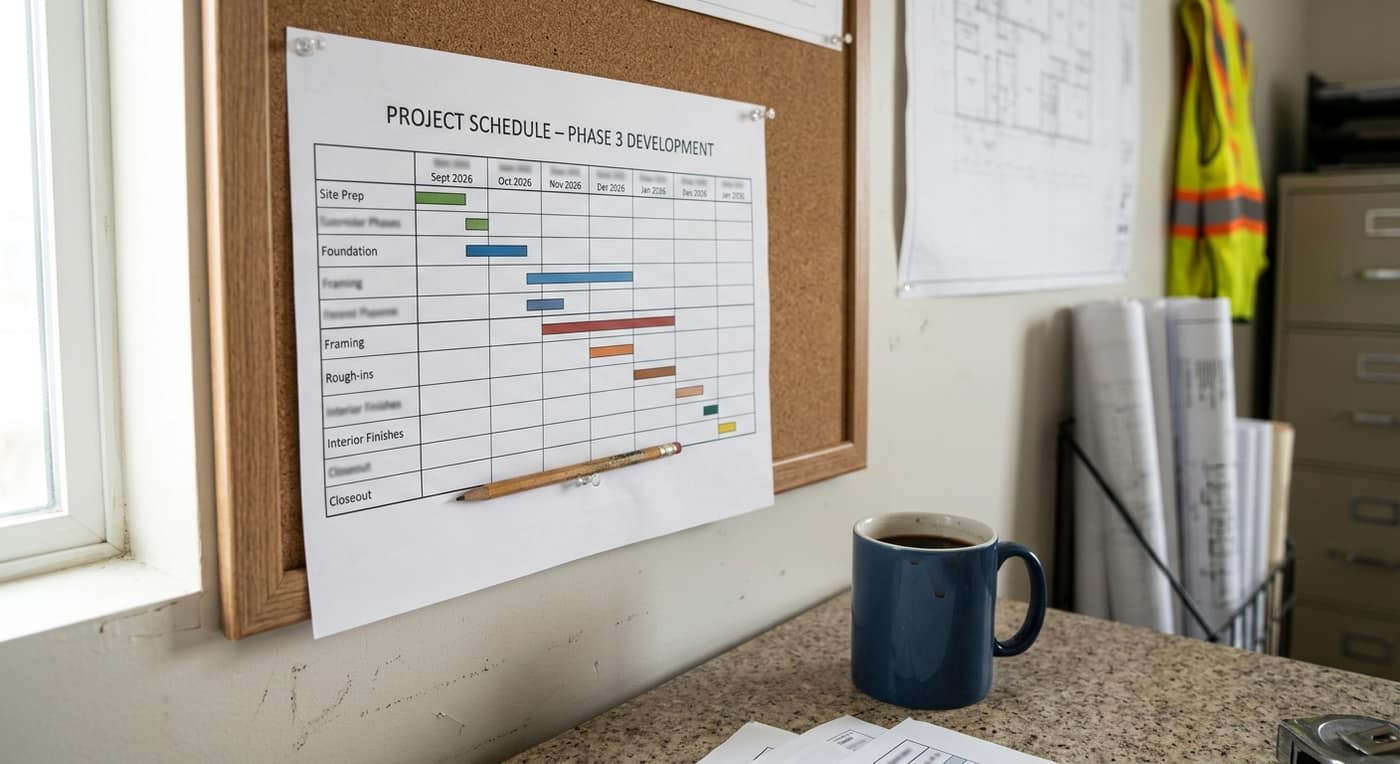
Ask for a written schedule that shows sequencing — what happens before what, and where inspection wait times are built in. This should line up with building permit and inspection timelines for your specific municipality, since Calgary, Airdrie, Chestermere, and Cochrane don't all move at the same pace.
Tip
A schedule with no inspection buffer is a schedule that's already planning to be wrong.
4. Site Access & Property Protection
A construction site inside or around an occupied home needs a plan for containing dust, protecting finished areas, securing tools and materials, and controlling who has access — especially during demolition phases where airborne particles and debris are a real concern.
Tip
Protecting the rest of your house is part of the job, not an optional courtesy.
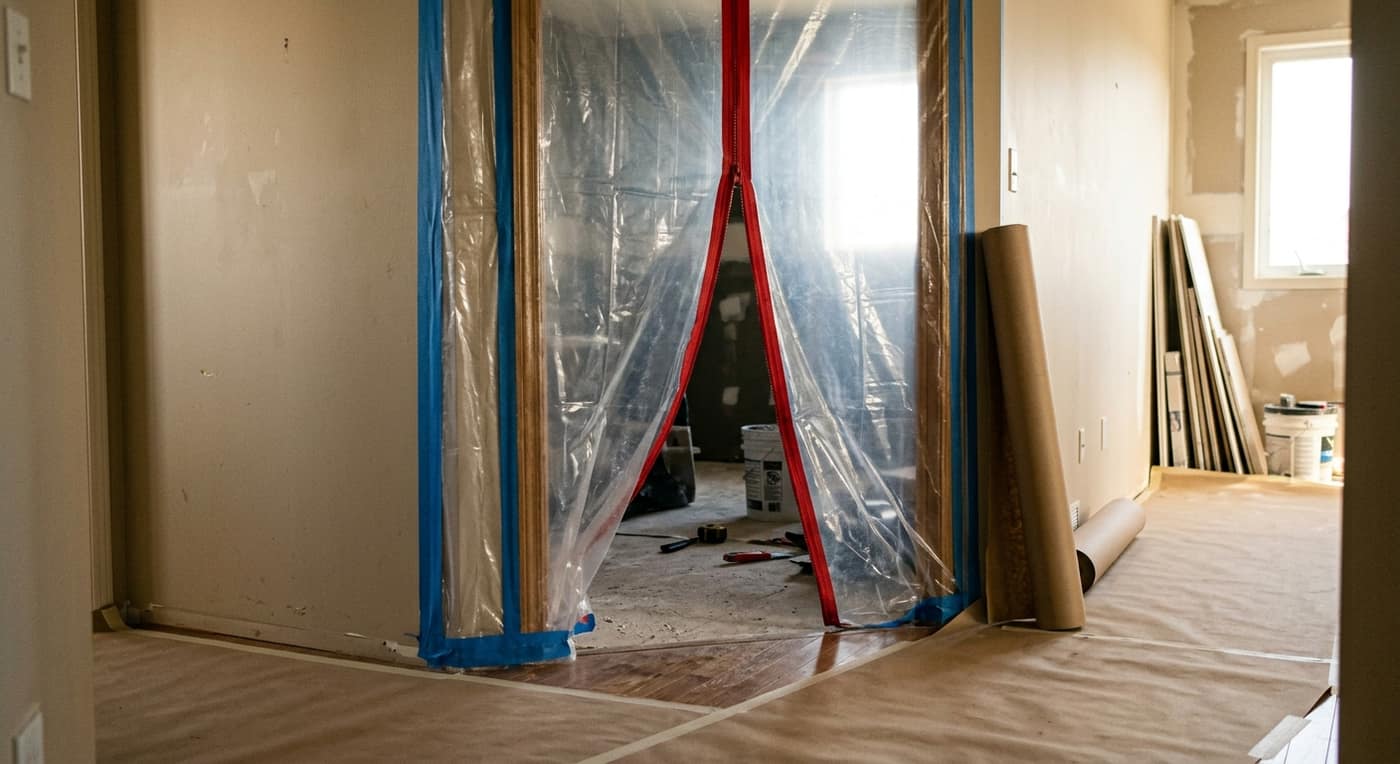
Ask how dust containment, floor protection, and site security will be handled, particularly during demolition. This matters even more where asbestos or vermiculite testing is relevant, since proper containment is part of what keeps a testing-and-abatement process safe for the rest of the household.
Tip
A sheet of plastic taped to a doorway is not the same thing as a containment plan.
5. Inspection & Milestone Coordination
Inspections and payment milestones should move together — a milestone payment tied to "framing complete" means much more when it's paired with a passed framing inspection, rather than just the contractor's word that the stage is done.
Tip
An inspection sign-off is worth more than any status update a contractor can give you verbally.
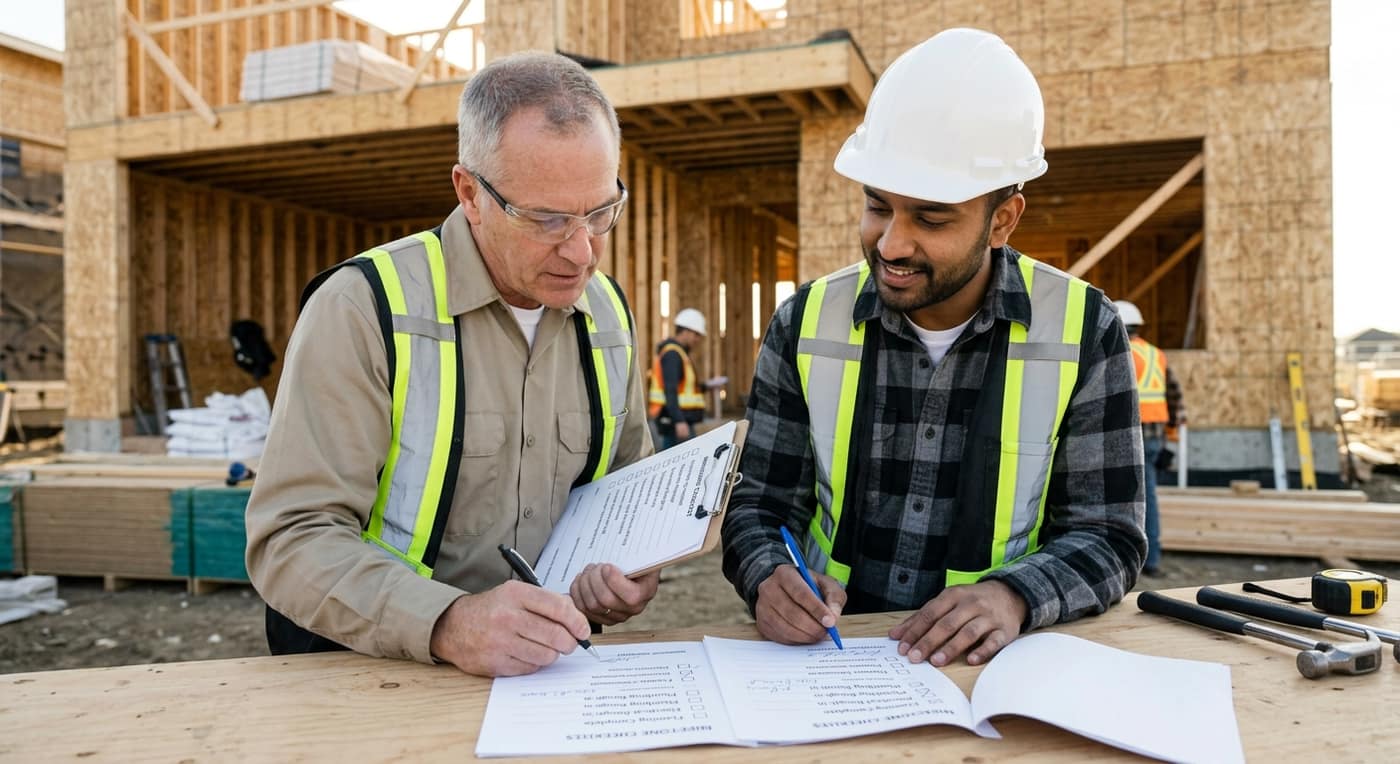
Ask how inspection scheduling and payment milestones are coordinated in the project plan — this is where your payment schedule and milestones should tie directly back to verifiable, inspected progress, not just calendar dates that sound reasonable on paper.
Tip
The strongest payment milestones are the ones an inspector has already agreed with.
6. Final Handover & Site Cleanup
The last stage of a project is easy to rush — everyone's ready to be done — but a real handover includes a deficiency walkthrough, full debris and material removal, and delivery of warranty documentation for anything installed, not just a quick goodbye.
Tip
How a project ends says as much about a contractor as how it started.

Ask what the final handover includes — walkthrough, cleanup, documentation — and confirm it happens before, not after, final payment. This is the natural bookend to the final payment and lien release process covered in our contract and financial guide, and it closes the loop on everything this series has walked through.
Tip
A rushed handover today is next month's phone call about something that was never actually finished.
The Complete "Hire With Confidence" Series
This post wraps up our 6-part series on vetting a contractor in Calgary, Airdrie, Chestermere, and Cochrane. Catch up on any part you missed:
- 1. Legal & Licensing — business registration, WCB, insurance, and the Builders' Lien Act
- 2. Permits & Code — who pulls the permit and why Alberta Building Code compliance matters
- 3. Site & Structural — frost depth, soil, drainage, and structural engineering
- 4. Building Science — moisture, asbestos, radon, WETT, and insulation
- 5. Contract & Financial — pricing, change orders, deposits, and payment schedules
- 6. Scheduling & Site Operations — you're reading it now
You've Read All 27 Boxes. Now Get the Checklist That Ties Them Together.
Scheduling & site operations is the last of seven categories in our full contractor vetting checklist. Download the complete, free guide — or talk to a team that already builds this way.
AM Builders — Basement Development, Home Renovations, New Home Construction & Commercial Construction across Calgary, Airdrie, Chestermere & Cochrane.
This article is for general educational purposes and reflects common Alberta scheduling and site safety practices as of September 2026. It is not legal, engineering, or safety advice. Always confirm current OH&S requirements and site-specific practices with a qualified contractor and your municipality.
Frequently Asked Questions
Can concrete be poured in winter in Alberta?
Yes, but it requires cold-weather protocols like heated enclosures, insulated blankets, or admixtures to ensure proper curing, since concrete that freezes before it cures loses strength permanently. A contractor scheduling a winter or shoulder-season pour should be able to explain exactly how they'll protect it, not just that they've "done it before."
What should a construction site safety plan include?
A site-specific safety plan should identify project hazards, name a competent supervisor responsible for site safety, and cover fall protection, excavation/trenching safety, and emergency procedures, in line with Alberta OH&S requirements. It should exist in writing before work starts, not be assembled after an incident.
How long does a typical basement development take in Calgary?
Timelines vary by scope, but a standard basement development in the Calgary area often runs 6 to 12 weeks from permit approval to completion, factoring in inspection wait times and trade scheduling. Winter starts can extend timelines due to weather-related sequencing. Ask for a written schedule with milestones rather than a single end date.
Who is responsible for site safety — the GC or the subcontractors?
The general contractor is typically responsible for overall site safety coordination and should have a named, competent supervisor on site, but individual subcontractors remain responsible for their own crews and equipment under Alberta OH&S rules. A homeowner should confirm the GC has a clear safety plan that covers the whole site, not just their own crew.
What happens during final handover on a renovation project?
Final handover should include a deficiency walkthrough, confirmation that all inspections have passed, site cleanup and debris removal, and delivery of any warranty documentation or manuals for installed systems. This is typically the point where final payment is released once outstanding items are resolved.