
Building Permits & Alberta Code Compliance: What Homeowners Need to Know Before Work Starts
By Afroz Shaik, Founder, AM Builders | September 14, 2026 | 7 min read
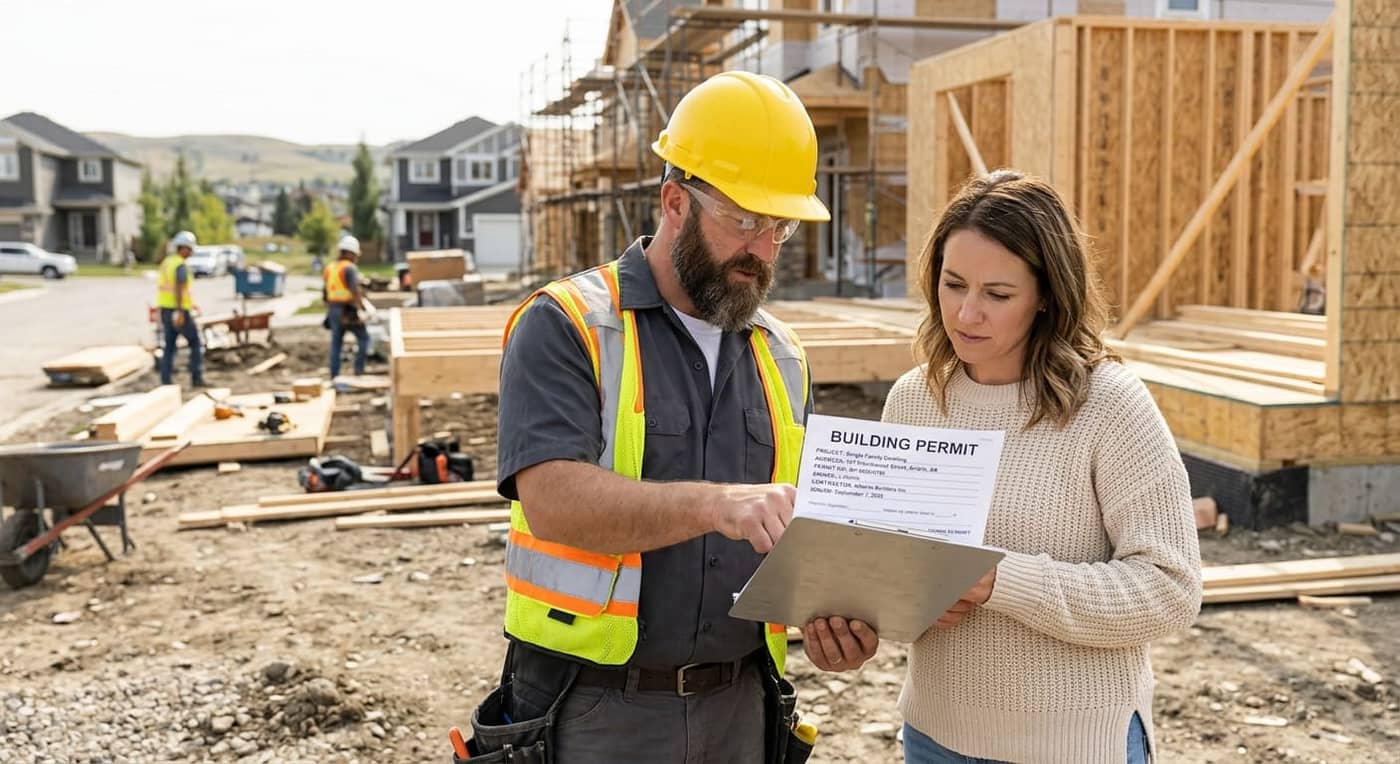
Quick Answer
Before work starts on any renovation, addition, or new build in Calgary, Airdrie, Chestermere, or Cochrane, confirm: (1) which permits your scope requires (building, electrical, plumbing, gas, development), (2) that the contractor — not you — is pulling them under their own name, (3) that their code references are current, (4) that inspections are actually scheduled at each stage, (5) that electrical/plumbing/gas trades are separately licensed and permitted, and (6) that requirements are confirmed for your specific municipality, since they aren't identical across the region.
- No permit number before the first shovel goes in the ground = stop the project.
- A contractor who calls permits "optional for small jobs" is offering you the liability, not a discount.
1. Building Permits: What They Actually Cover
A building permit confirms a plans reviewer at the municipality has checked your project against structural, fire, and life-safety requirements before construction starts — it's a design check, not just a formality. Most basement developments, additions, structural renovations, and all new builds require one, along with separate electrical, plumbing, and gas permits where applicable.
Tip
A permit is the only third party in the room whose entire job is to protect you, not sell you something.
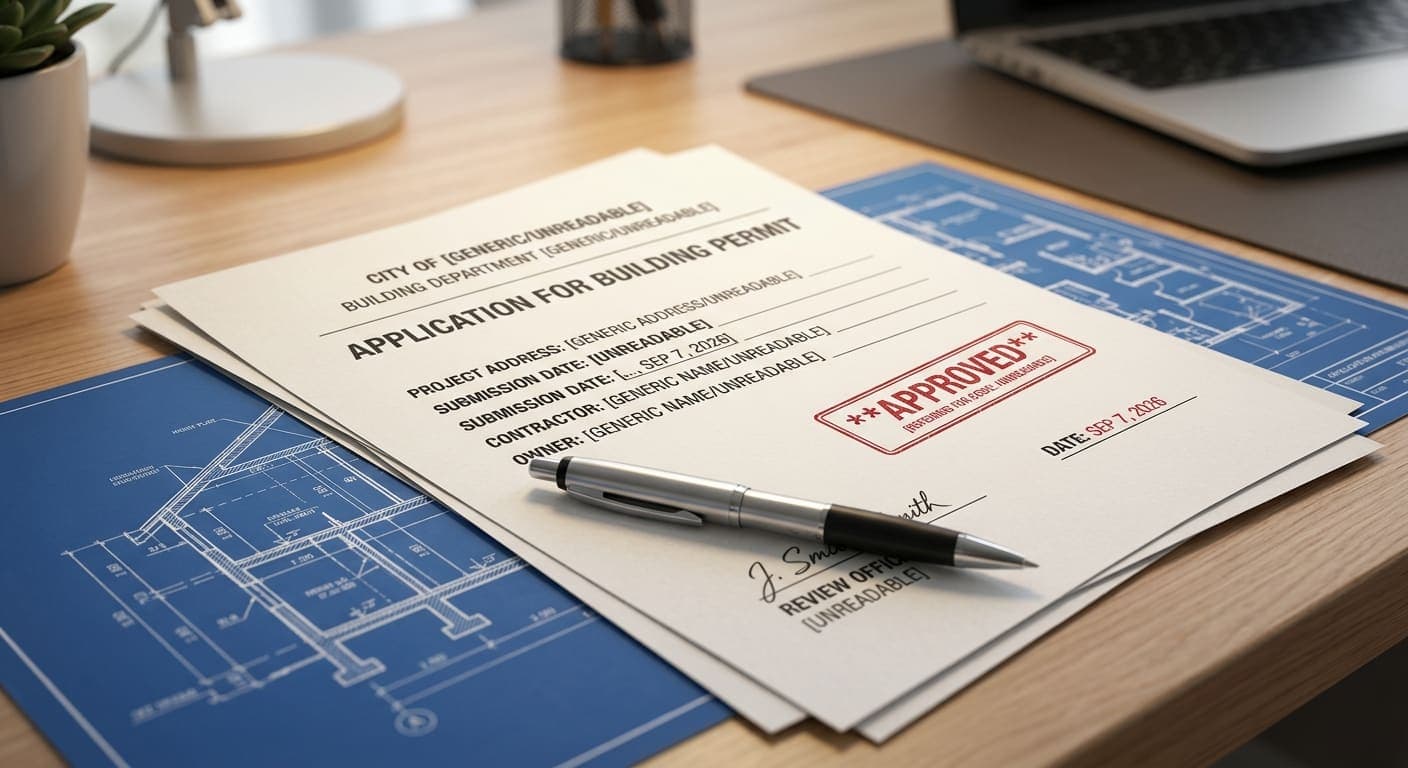
Ask for the permit number before any demolition or framing begins, and confirm in writing which permits (building, electrical, plumbing, gas, development) your specific scope needs — a basement development, for instance, often triggers three or four separate permits, not one.
Tip
One project, four permits — and skipping any one of them can stall the whole job at resale.
2. Who Pulls the Permit — and Why It Matters
A licensed general contractor should pull permits under their own business registration, which keeps them — not you — accountable if the work fails inspection. This is directly tied to the business licensing and insurance checks you should already be running before signing anything.
Tip
Whoever's name is on the permit is whoever's on the hook when the inspector shows up.

If a contractor asks you to pull the permit yourself "to save time" or "keep costs down," treat that as a serious warning sign — it can quietly shift code-compliance liability onto you, the person least equipped to manage it.
Tip
"You pull the permit" is contractor-speak for "you take the risk."
3. Alberta Building Code Compliance
The Alberta Building Code sets minimum requirements for everything from egress window sizing in bedrooms to smoke and carbon monoxide alarm placement, and it's updated periodically — a contractor working from a code edition that's several years out of date can put your entire project offside without realizing it.
Tip
Code compliance isn't a one-time lesson a contractor learned years ago — it's a moving target.
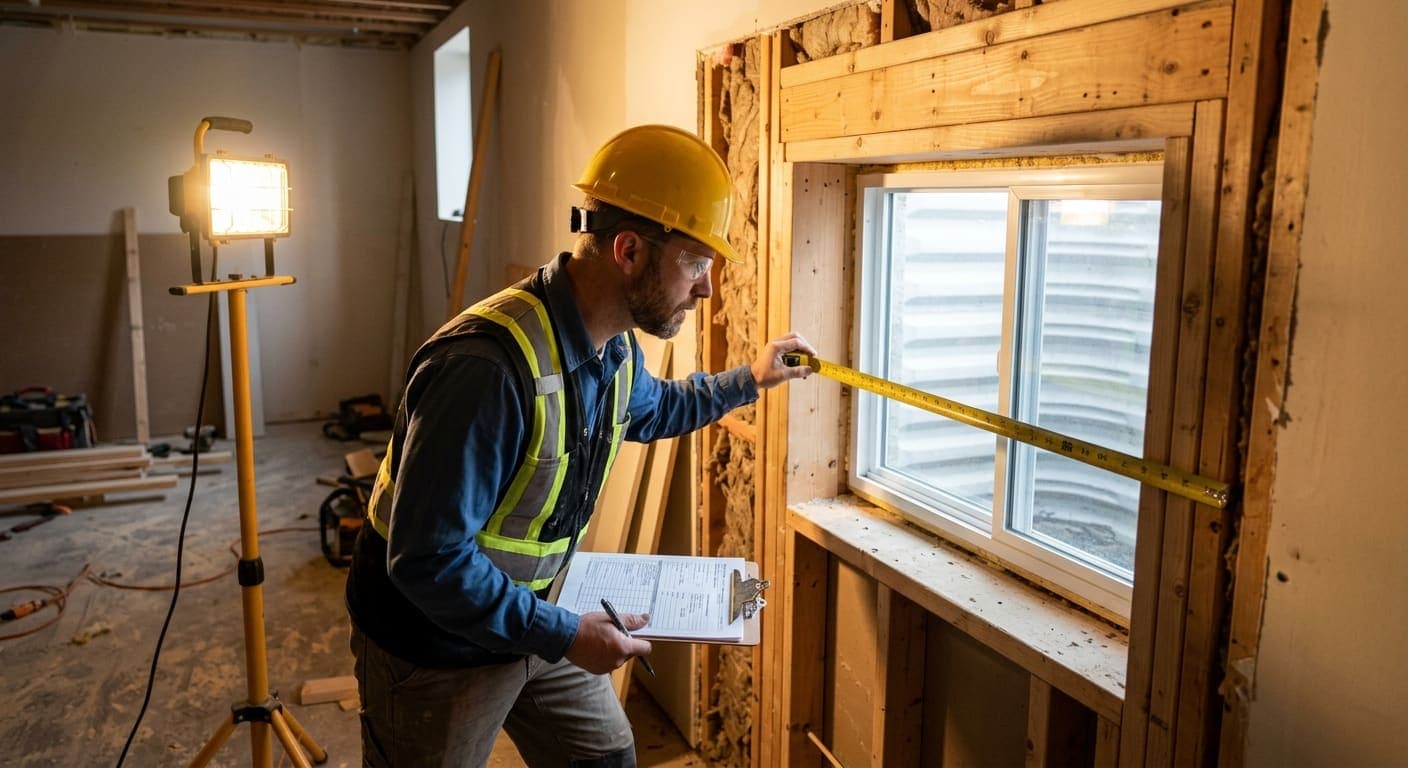
Ask which edition of the code they're building to, and how egress windows, ceiling heights, and fire separations are being handled in your specific scope. This matters even more where structural changes like load-bearing wall removal or foundation work are involved — code and structural safety are two sides of the same coin.
Tip
"That's how we've always done it" is not a code reference — it's a guess with a hammer.
4. Inspections & Sign-Offs
A permit without a completed inspection is only half the job — municipalities schedule inspections at key stages (framing, electrical rough-in, plumbing rough-in, insulation, final) specifically so problems get caught before they're buried behind drywall.
Tip
An uninspected wall looks exactly like an inspected one — right up until something goes wrong.
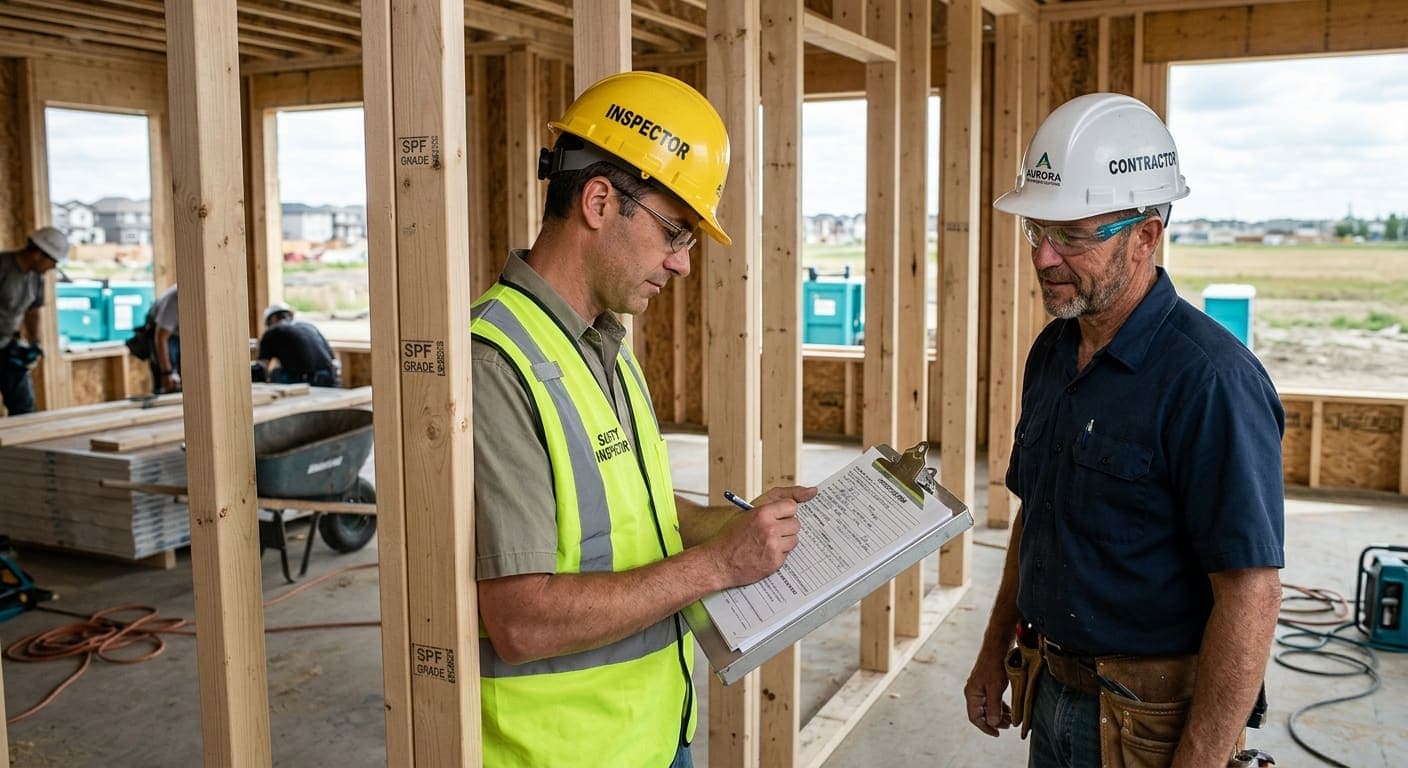
Ask for a copy of the inspection schedule and request to see (or be notified of) each passed inspection as it happens, not just a final "we're done" at the end. This pairs directly with having a clear site safety and scheduling plan, since inspections need to be built into the project timeline, not squeezed in as an afterthought.
Tip
"We'll get it inspected eventually" is how homeowners end up with a house they can't sell.
5. Licensed Trades: Electrical, Plumbing, Gas & HVAC
Electrical, plumbing, and gas work legally requires a certified, licensed tradesperson operating under their own permit — a general contractor cannot self-perform this work in Alberta, no matter how experienced their crew is.
Tip
"My guy is basically an electrician" is a sentence that should end the conversation, not continue it.
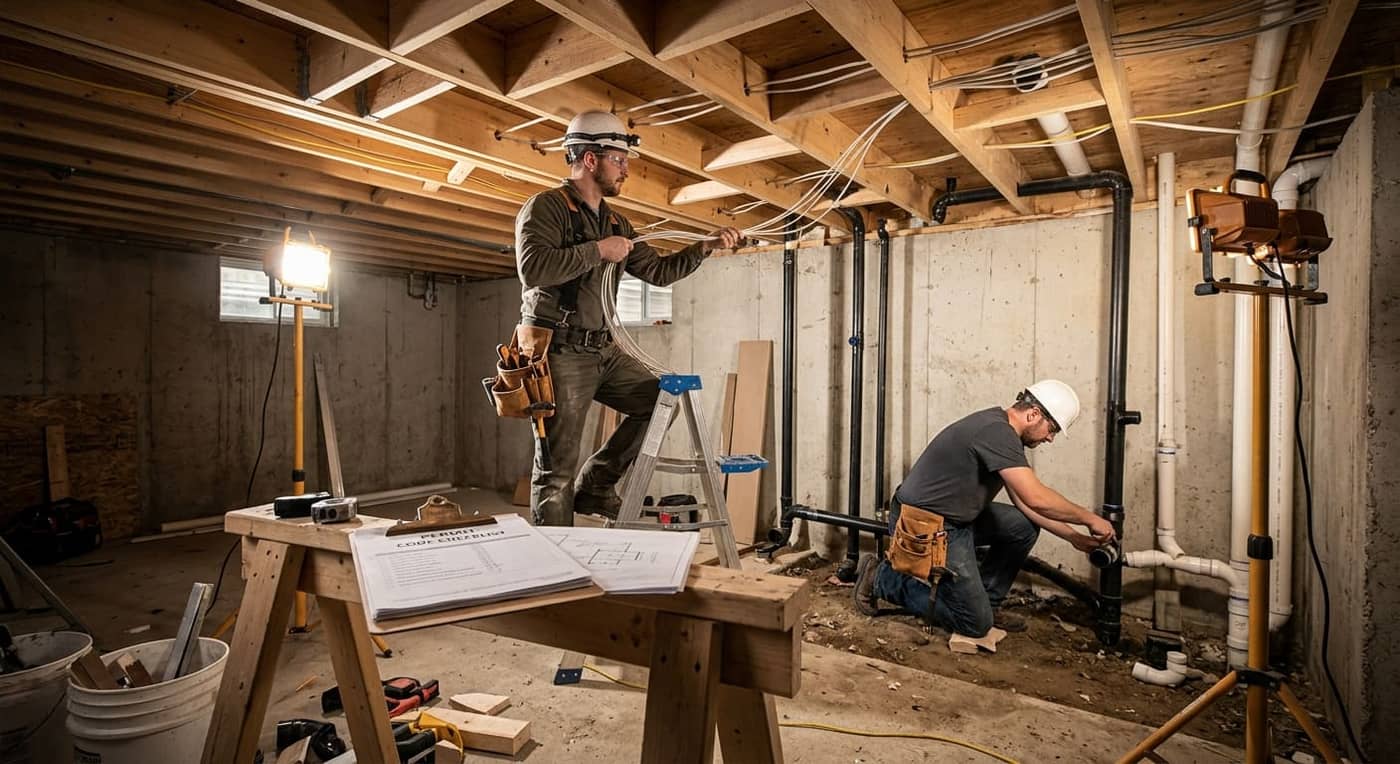
Ask for the name and license number of the specific electrician, plumber, and gasfitter on your job, not just the general contractor's own credentials. This same trade-certification question matters for anything touching ventilation, insulation, or energy code compliance, where HVAC and building-envelope decisions overlap directly with permitting.
Tip
A licensed trade's stamp on the permit is worth more than any verbal guarantee.
6. Municipal Differences Across Calgary, Airdrie, Chestermere & Cochrane
Permit requirements, fees, and timelines are set city by city in Alberta — a process that's routine in Calgary can look different in Airdrie, Chestermere, or Cochrane, and a contractor experienced in one municipality isn't automatically current on another's rules.
Tip
Four cities, four permitting processes — assuming they're all the same is how timelines quietly blow up.
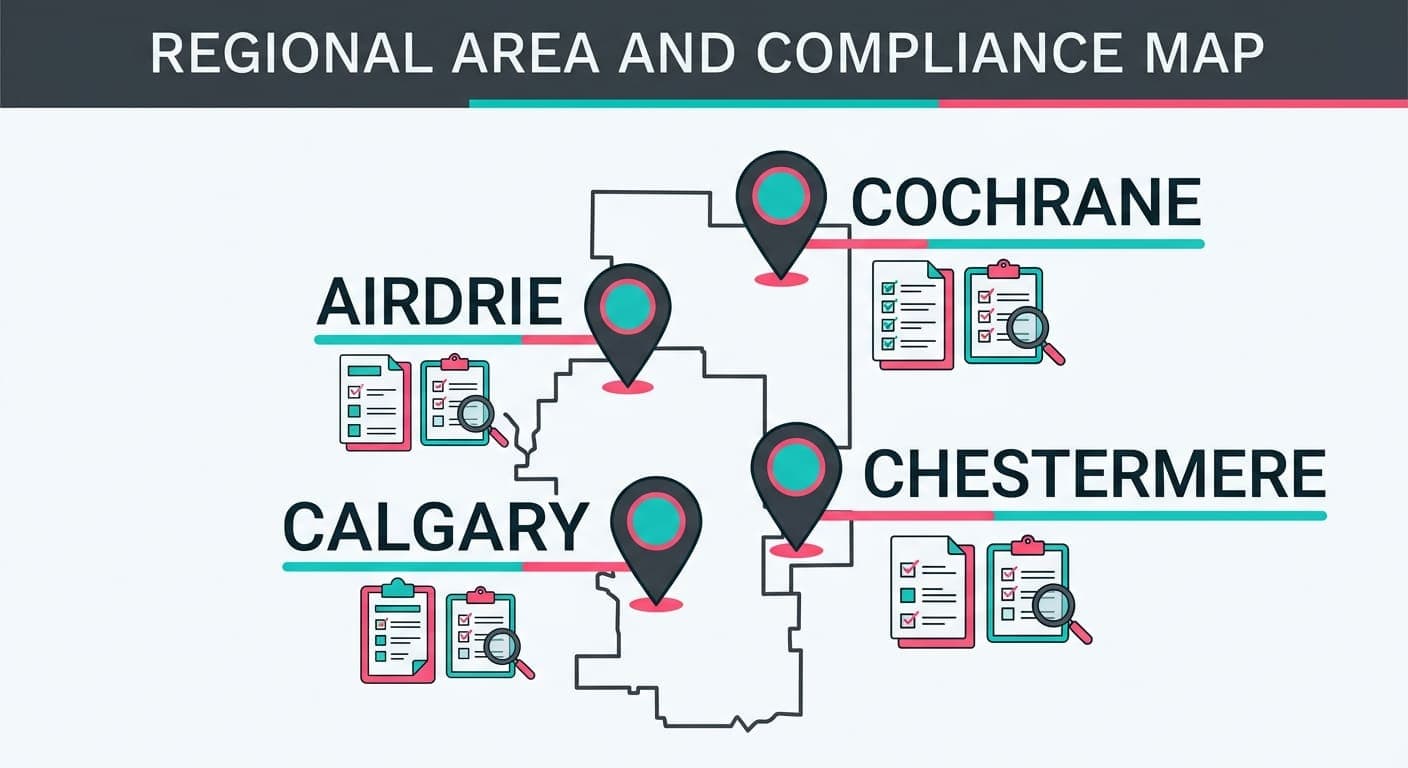
Ask directly whether the contractor has pulled permits in your specific municipality before, and confirm the expected timeline — this also ties back to how payment milestones should be scheduled, since a payment tied to "permit approval" only works if everyone agrees on a realistic date for that city.
Tip
Local experience isn't a nice-to-have here — it's the difference between a two-week permit and a two-month one.
Don't Sign Anything Until You've Checked These 27 Boxes
Permits & code is just one of seven categories in our full contractor vetting checklist. Get the complete, free guide — or talk to a team that already builds this way.
AM Builders — Basement Development, Home Renovations, New Home Construction & Commercial Construction across Calgary, Airdrie, Chestermere & Cochrane.
This article is for general educational purposes and reflects common Alberta requirements as of September 2026. It is not legal advice. Always confirm current permit and code requirements with your municipality and a licensed professional before signing a construction contract.
Frequently Asked Questions
Do I need a permit for a basement development in Alberta?
Yes. Basement development almost always requires a building permit in Alberta municipalities, and often electrical and plumbing permits as well if new circuits, fixtures, or a bathroom are being added. Requirements are set city by city, so confirm directly with Calgary, Airdrie, Chestermere, or Cochrane's permitting office for your specific scope.
Who is responsible for pulling the building permit — me or the contractor?
A licensed general contractor typically pulls the permit under their own registration, which keeps them accountable for the work passing inspection. If a contractor asks you to pull the permit yourself, that is a red flag — it can shift legal liability for code compliance onto you as the homeowner.
What happens if I do renovation work without a permit in Alberta?
Unpermitted work can be ordered opened up or torn out by the municipality, may void your home insurance in the event of a claim, and typically has to be disclosed (and can reduce value) at resale. Permits exist to verify the work meets minimum safety standards, not just to collect a fee.
Can a general contractor do electrical or plumbing work themselves?
No. In Alberta, electrical, plumbing, and gas work must be performed by a certified, licensed tradesperson under its own permit, regardless of the general contractor's own licensing or experience. A GC coordinates these trades but cannot self-perform this work legally.
How often does the Alberta Building Code change?
Alberta adopts updated editions of the National Building Code on a multi-year cycle, and municipalities can issue local bulletins in between. Requirements like egress window sizing, smoke and CO alarm placement, and insulation values are common areas that shift between editions, so a contractor working from an outdated code reference can put your project offside.